
More Than Screen Time: How Doom Scrolling Reveals the Desires of the Heart
Why we doom scroll, and practical tips on how to stop.

Introduction: There really is doom in doom scrolling…
It’s 11PM. You’re unwinding before bed, and decide to take a peek at your favorite social media platform. Three hours later, you’ve watched 200 videos about microplastics - a topic you hadn’t thought about before tonight. Now you’re convinced they’re everywhere. In your food, your air, your bloodstream. Future archaeologists will dig you up and say, “Ah yes, another Plastic Person from the 21st Century.”
…and then you expect your brain to go to sleep after overloading it with hours of negative content.
By definition, doom scrolling is “spending excessive time online scrolling through content that makes one feel sad, anxious, or angry.” Maybe you’ve successfully stayed away from the “doom” content like microplastics, but maybe you still struggle with watching hours of cooking tutorials, coffee ASMR, or whatever else you may like to watch. Ironically, many of the short-form videos keeping you hooked with little dopamine hits might be the ones telling you how to stop: Put your phone in another room. Use a real alarm clock. Delete the apps. Replace scrolling with something else.
These can be helpful practical habits when it comes to fleeing immorality, but Jeremiah 17:9 also reminds us, “The heart is deceitful above all things, and desperately sick; who can understand it?” A phone in another room might stop you from swiping, but that alone won’t change the heart attitude that makes you crave it in the first place.
So why do we doom scroll? Here are three reasons.
Escapism
If you’ve ever been standing in line, in a waiting room, or on public transportation, almost every single person near you is on their phone. Everyone is isolated in their own little world, probably scrolling social media, or perhaps playing a game, or reading a news story, or texting. I’ve heard plenty of people lament that we’ve lost the art of being bored. But this isn’t a new phenomena: it’s been around longer than the cell phone.

The issue isn’t the phone itself, it’s our tendency to want to escape the situation that we are in (whether due to our fear of boredom, or of initiating a conversation, etc.), and replace it with something safe or entertaining. Now I wouldn’t say my recommendation is to never use your phone in “boring” situations. It is advantageous to be able to send emails, respond to text messages, and even entertain yourself a bit through videos when you really have nothing else to do (see my previous article about moderation for more of my thoughts on that topic). But the problem arises when we’re always escaping from the settings where we ought to be present.
Think of families sitting at dinner, each absorbed in their own screen instead of each other. Or someone mindlessly scrolling Instagram Reels during work hours. It’s not about eliminating phone use completely, but about recognizing when we’re using it with intentionality for good versus when we’re just distracting ourselves. Next time you instinctively reach for your phone, try to replace that instinct with a brief moment of self-awareness to pause and ask: Am I using this wisely, or just numbing my mind?
Instant Reward
By now, it’s well documented that phones trigger dopamine hits with every like, message, or video we watch. Dopamine is the "feel-good" hormone and humans are naturally wired to seek it out. That’s why, after closing Instagram, you might find yourself doom scrolling on Facebook instead. And once you close Facebook, it’s easy to start doom scrolling the news. By then, there’s surely something new on Instagram so you might want to return to see what’s new. Or worse, if you’ve ever closed an app just to immediately open the same app again by way of habit, take that as your cue to admit you may have a problem. I lament to say I’ve been there.
But the issue, once again, comes down to the heart. Proverbs 25:28 says, "A man without self-control is like a city broken into and left without walls." While it’s true that technology is designed to exploit our natural craving for instant pleasure, the same can be said of things like junk food or gambling. For some, this might mean turning off notifications or even deleting social media altogether. But even if you take those steps, without discipline, you may find yourself replacing one addictive habit with another. You can’t fix your issues with technology if you treat those issues as if they’re independent from your heart/character.
FOMO
Part of the reason I struggled with quitting Instagram was Instagram Stories. It was so addicting to see what people were up to, and since Stories disappear after 24 hours, you had to be constantly online to make sure you didn’t miss one. In today’s social media age, we "connect" with people by liking their posts. While it’s easy to feel like we’re missing out, we often find ourselves keeping up with people who don’t impact our lives and learning things we don’t need to know about them. The same can be said about the news cycle: we feel the need to stay up-to-date on every event happening in the Middle East, Africa, or even a few states away; surely certain people ought to keep up with news at this scale, but if you’re not able to take action in response to this news within your spheres of authority, do you really need to keep up with that media?
Ecclesiastes 1:8 says, "All things are full of weariness; a man cannot utter it; the eye is not satisfied with seeing, nor the ear filled with hearing." No matter how much we consume - whether it's updates from friends, breaking news, or mindless entertainment - we rarely reach a point where we say, "That's enough. I'm satisfied." There’s always another story, another post, another headline pulling us back in.
While social media has benefits for staying connected, the next time you find yourself mindlessly scrolling, I encourage you to ask: Why are you checking X again? Do you truly care about what others are doing, or are you simply voyeuristically peering into their lives?
How to Stop
If you recognize that you have a doom scrolling problem, how do you actually stop? I mentioned some practical steps above that might work for you: turning off notifications, deleting apps, or moving your phone to the other side of the room before bed. But if the issue is really your heart, those actions might merely wash the outside of the cup (which is good as far as it goes) but the inside of the cup needs a good cleaning too (see Matthew 23:25-26 for more context on the dirty cup analogy). Proverbs 4:23 says, "Above all else, guard your heart, for everything you do flows from it.”
Here are a few suggestions to address the heart issues we’ve discussed:
Confess and repent of any sin you may have committed. If you've been sinning through your doom scrolling (consuming unwholesome content, neglecting responsibilities, etc.) confess those sins to the Lord and repent.
Train your heart to love the things of God. I’ll expand more on this in my next article, but it’s important to recognize that even if you cut things out, that may not be enough. Joshua 1:8 says "This Book of the Law shall not depart from your mouth, but you shall meditate on it day and night, so that you may be careful to do according to all that is written in it. For then you will make your way prosperous, and then you will have good success." We are exhorted to focus on the things of God first and in all things as we align our lives accordingly. This will take time, but consistently filling your mind with the things of God will gradually reshape your desires.
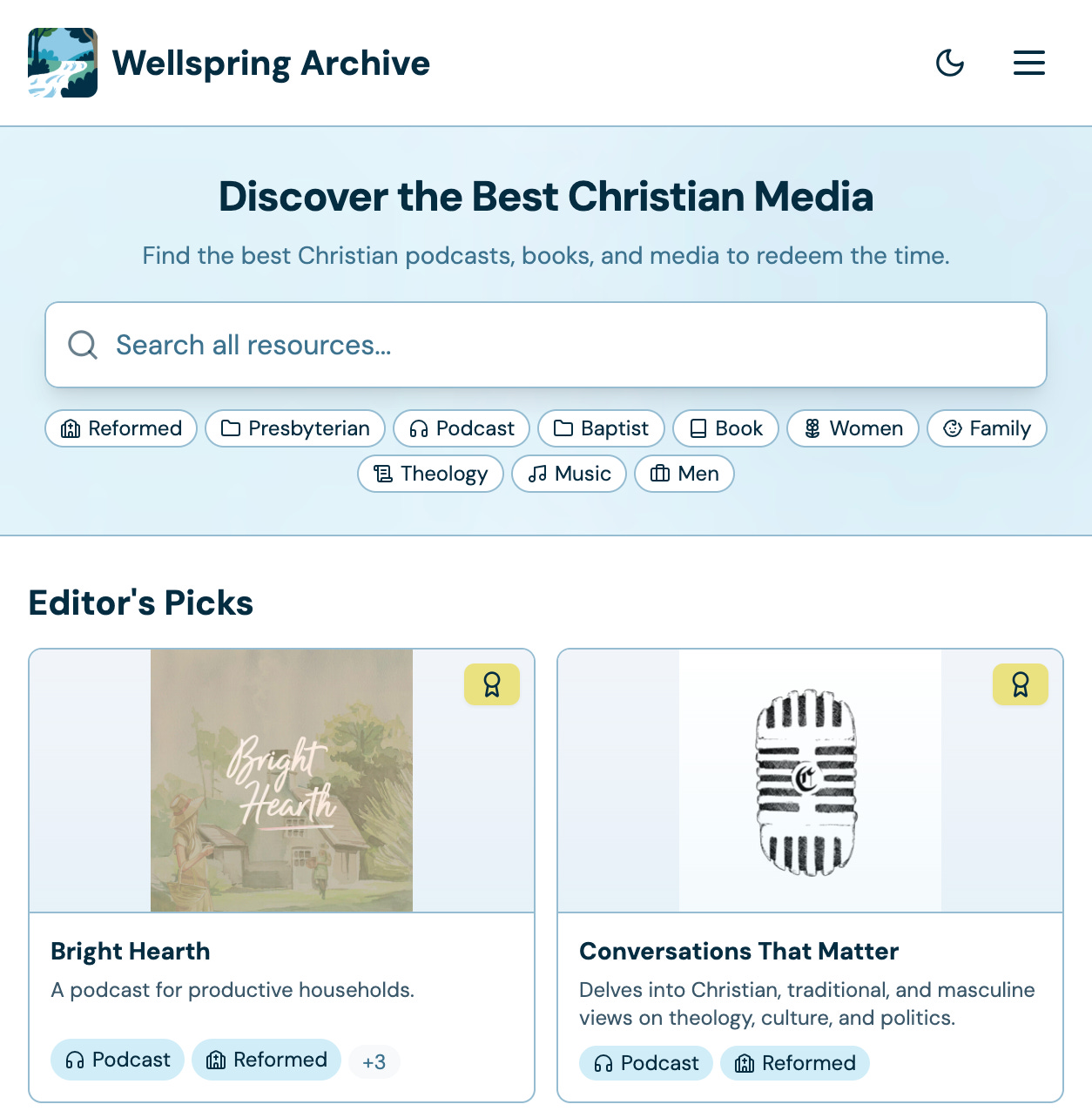
Replace your doom scrolling with edifying content. When you find yourself with available time to consume content but aren’t sure what to read, watch, or listen to, why not fill that space with something that builds you up? To avoid hopping into the Gluttonous Fool’s ditch, this takes intentionality. If you’re looking for edifying content that aligns with these goals, I’m excited to share my project, Wellspring Archive, a directory of some of the best Christian media I’ve been able to find throughout the years. Next time you’re searching for edifying content, check out this curated list of resources, and feel free to submit your own!
Take Heart
Finally, some encouragement. God is faithful in His promises. He assures us that He is working in us (Philippians 2:12–13) and that He is patient with us (2 Peter 3:9). So as you reflect on your own doom scrolling, be encouraged: the Lord has the power to turn your heart from the doom and gloom and to teach you to love the things He loves.
The ultimate motivation for stopping the doom scroll isn’t just to cut back on screen time (people managed that just fine before the rise of television in the 1950s) or to chase happiness, but to bring our hearts into submission to God. When we deliberately guard our minds against escapism, the dopamine hit, and the fear of missing out and instead fill them with what is good, we not only quiet the noise but tune our hearts to discern what is the good, pleasing, and perfect will of God (Romans 12:2).
Thanks for such a detailed and insightful essay. Don't mind that it hasn't gotten as much traction as you'd like. I promise that it's rich with an important message, and the people who need to read it will. It's only a matter of time.